


There are photographers.And then there are people who somehow manage to make ordinary life feel impossibly cinematic.Saul Leiter belonged to that category.The rare category.The kind difficult to imitate because what they create feels deeply tied to how they saw the world rather than simply what they photographed.Because Saul Leiter did not photograph spectacle.He photographed pauses.Fogged windows. Reflections. Rain. Half-visible strangers. A red umbrella passing briefly through snow.The kind of moments most people walk past without noticing.And somehow —he made them unforgettable.
To understand Saul Leiter, one must first understand something deeply strange about him:
he was radically uninterested in noise.
Which feels almost revolutionary now.
Born in Pittsburgh in 1923, Leiter originally moved to New York intending to become a painter after leaving theological studies — yes, theological studies, which somehow feels emotionally significant when looking at his photographs.
Because there is something almost spiritual about the way he looked at everyday life.
Not dramatic spirituality.
Quiet spirituality.
The kind existing in small moments.
Light touching a coat sleeve.
A reflection cutting through glass.
Someone briefly existing between visibility and disappearance.

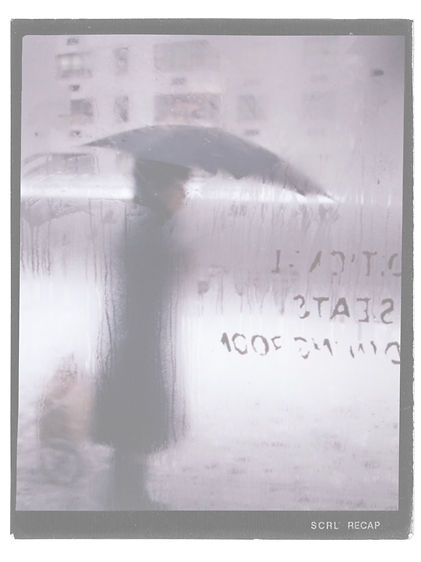
And then there was the color.The color.
Because Saul Leiter was doing color photography long before people respected it properly.At a time when serious photography worshipped black and white with deeply concerning devotion, Leiter quietly insisted on color.
Not loud color.
Not performative color.
Muted reds.
Foggy yellows.
Soft reflections.
Color behaving emotionally rather than decoratively.And perhaps this is precisely what made his work revolutionary.He used color psychologically.Atmospherically.Almost like memory.Because memory rarely arrives sharp.It arrives fragmented.Partially obscured.Half felt.Exactly like many of Leiter’s images.
© Saul Leiter / Saul Leiter Foundation.
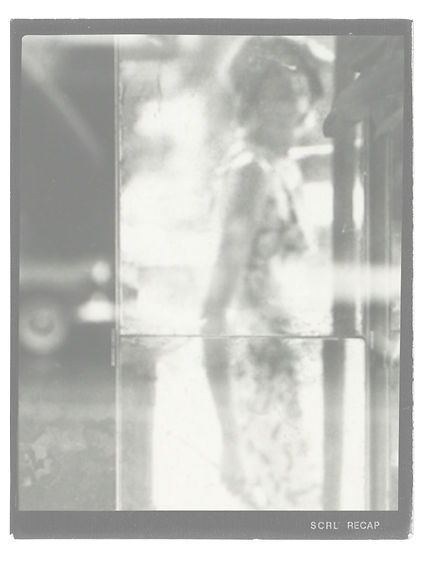
His photographs often feel accidental.But not accidentally accidental.
Deliberately accidental.A strange sentence perhaps.
Yet correct.
People are partially hidden.
Frames interrupted.
Windows obscuring faces.
Snow interfering.
Reflections refusing clarity.And somehow —this lack of visibility becomes the beauty itself.Because Saul Leiter understood something deeply important:
you do not always need to see everything to feel something completely.
\A terrifying concept for people oversharing online every five minutes honestly.
© Saul Leiter / Saul Leiter Foundation.

Works such as his New York street photography transformed ordinary urban moments into something strangely intimate.Women in red coats. Umbrellas dissolving into weather. Taxi windows behaving like paintings.The city through Leiter’s lens never felt loud.Which, considering it was New York, feels almost impossible.His New York felt private.Soft.Slightly melancholic.Like the city had briefly lowered its voice.And perhaps one of the most beautiful things about Saul Leiter is this:he remained relatively overlooked for decades.No massive cultural obsession immediately.No instant canonization.He continued working quietly.Fashion photography included — for magazines like Harper’s Bazaar and Elle — while remaining almost suspiciously unconcerned with fame.Which honestly feels psychologically impossible today.Recognition arrived much later in life.And still —he remained strangely modest about it.Once saying:"I believe there is such a thing as a search for beauty."Simple.Quiet.Very Saul Leiter.
© Saul Leiter / Saul Leiter Foundation.

What makes Saul Leiter inspiring is not only talent.Talent is common enough.Perspective is rare.Leiter reminds us that beauty does not need to scream for attention.That ordinary moments deserve observation.That slowness still matters.And perhaps most importantly —that sometimes the world becomes extraordinary the moment somebody finally learns how to look at it properly.Saul Leiter photographed life as though nothing was ever truly ordinary.And perhaps he was right.
© Saul Leiter / Saul Leiter Foundation.

There was also something deeply private about him.Perhaps intentionally so.Saul Leiter openly admitted he enjoyed anonymity.Which, in today’s world of constant visibility, feels almost radical.He liked the freedom of existing quietly.No desperate ambition to dominate cultural conversation.No obsession with becoming mythologized.And maybe this is precisely why mythology arrived anyway.Because people who genuinely care about making work often leave something deeper behind than people trying very hard to become important.And perhaps the most beautiful contradiction about Saul Leiter is this:
his work feels melancholic.Yet never hopeless.
Lonely perhaps.
But warm.
Quietly warm.Like somebody standing beside you in silence rather than insisting on conversation.
© Saul Leiter / Saul Leiter Foundation.

People often forget that Leiter was not only a photographer.He was also a painter.And honestly — you can tell.
You can tell immediately.
His photographs often feel painted rather than taken.
The framing.
The abstraction.
The emotional use of color.
Sometimes his images barely seem interested in sharpness at all.
As though precision itself bored him slightly.He was never chasing perfect visibility.He was chasing atmosphere.The feeling of seeing something briefly.Almost losing it.And somehow remembering it anyway.Which, quite frankly, sounds suspiciously similar to memory itself.
© Saul Leiter / Saul Leiter Foundation.

And perhaps the strangest thing about Saul Leiter is that he never behaved like someone historically important.Which feels suspicious honestly.Because history usually rewards noise.Certainty.Performance.People aggressively insisting on their own relevance.Saul Leiter did none of that.He spent decades living and working in relative obscurity in his East Village apartment in New York — an apartment famously overflowing with photographs, books, paintings, forgotten negatives and accumulated objects.Not curated chaos.Real chaos.The kind created by someone far more interested in making things than organizing them attractively for visitors.And somehow —that feels deeply aligned with his work.Nothing overexplained.Nothing overperformed.Just life quietly existing.
© Saul Leiter / Saul Leiter Foundation.

Saul Leiter reminds us of something strangely difficult to practice:
not everything meaningful requires explanation.
Not every image demands clarity.
Not every feeling arrives fully visible.
Sometimes fragments become enough.
A shadow.
A reflection.
A woman in red disappearing into weather.
And somehow —
you still understand exactly what you were meant to feel.
Perhaps Saul Leiter’s greatest talent was not photography at all.
Perhaps it was patience.
The patience to stand still long enough for ordinary life to reveal itself properly.
Because while everyone else searched for spectacle,
Leiter quietly paid attention.
And maybe that is the rarest thing a person can still do now —
to look carefully.
Without rushing to explain what they have seen.
© Saul Leiter / Saul Leiter Foundation.


