


There are choreographers.
And then there is Pina Bausch.
Which feels less like choreography and more like emotional excavation.
Because Pina Bausch did not simply make dances.
She made people feel uncomfortably understood.
Sometimes beautifully.
Sometimes painfully.
Occasionally both at once.
And perhaps that is precisely why her work continues haunting people long after the curtain closes.
You do not simply watch Pina Bausch.
You experience her.
Psychologically.
To understand Pina Bausch, one must first understand this:
she changed dance permanently.
Not slightly.
Structurally.
Before Pina, dance — particularly ballet — often existed within technical perfection.
Beautiful bodies.
Beautiful movement.
Beautiful discipline.
And then Pina quietly entered the room and asked a rather inconvenient question:
But what does any of this actually feel like?
Because movement alone was never enough for her.
She wanted emotion.
Contradiction.
Fear.
Desire.
Loneliness.
Repetition.
Human awkwardness.
Everything people usually try very hard to hide.


Her work became known as Tanztheater — dance theatre.
But honestly, even that feels insufficient.
Because Pina’s performances existed somewhere between dance, theatre, memory, psychology and emotional confession.
Her dancers did not simply move.
They repeated gestures obsessively.
Laughed strangely.
Cried.
Spoke.
Ran.
Collapsed emotionally and physically.
Sometimes all within the same performance.
Which sounds chaotic.
And occasionally was.
But deeply intentional chaos.
The kind revealing something frighteningly honest about human behavior.
Because Pina understood something important:
people repeat themselves emotionally.
We return to the same wounds.
The same desires.
The same disappointments.
Again.
And again.
And again.
And somehow she translated this into movement.
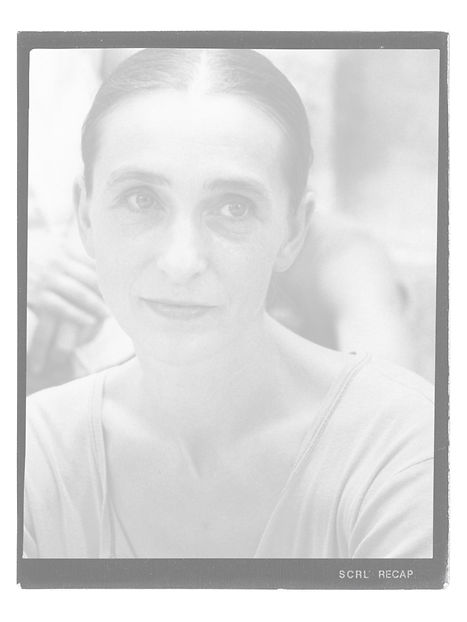
Her choreography often looked less like dance and more like memory behaving physically.Especially works like Café Müller.
Bodies walking blindly.
Chairs falling.
People trying to reach one another and somehow repeatedly failing.
Watching it feels strangely personal.
Like remembering something painful you cannot fully explain.
Then there is Kontakthof.
A work obsessively exploring relationships, intimacy, performance and social behavior.
The awkwardness of wanting love.
The performance of attraction.
The quiet humiliations existing between men and women.
Because Pina understood something deeply uncomfortable —
human connection is beautiful.
And embarrassing.
At the exact same time.

And then there was her process.
Perhaps one of the rarest things about her.
Pina rarely told dancers what to feel.
Instead, she asked questions.
Personal questions.
What scares you?
What makes you jealous?
When did you last feel lonely?
What memory never left you?
Her choreography often emerged from dancers’ emotional responses rather than technical instruction.
Which meant every performance carried real psychological texture.
Real vulnerability.
Not performance pretending to be truth.
Truth rearranged into performance.
A very different thing.

Pina also radically changed what dancers were allowed to be.
Young.
Old.
Conventionally beautiful.
Not conventionally beautiful.
None of this interested her very much.
She cared about presence.
Character.
Emotional honesty.
Which, honestly, still feels revolutionary.
Especially within industries obsessed with perfection.
Pina never chased perfection.
She chased humanity.
Messy humanity.
Contradictory humanity.
The kind difficult to package attractively.

And perhaps this is why younger generations continue returning to her work.
Because Pina reminds us that emotion does not weaken art.
It becomes the art.
That sensitivity can still be intelligent.
That movement can speak when language fails entirely.
And perhaps most importantly —
that sometimes the soul says things the body understands long before the mind catches up.
Pina Bausch did not choreograph dances.
She choreographed emotional truth.
Which, quite frankly, is significantly harder.