


There are writers.
And then there are people who somehow turn themselves into an entire atmosphere.
Capote belonged to the second category.
Writer.
Socialite.
Observer.
Professional collector of secrets perhaps.
Calling him simply an author somehow feels deeply insufficient.
Too administrative.
Because Capote never simply wrote stories.
He entered rooms.
Studied people.
Listened carefully.
And then — quite inconveniently for everyone involved — remembered everything.
Which, as history proved, terrified people.
For good reason.
To understand Truman Capote one must first understand this:
he made observation into an art form.
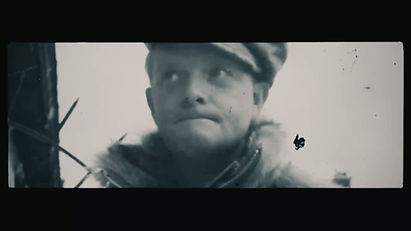
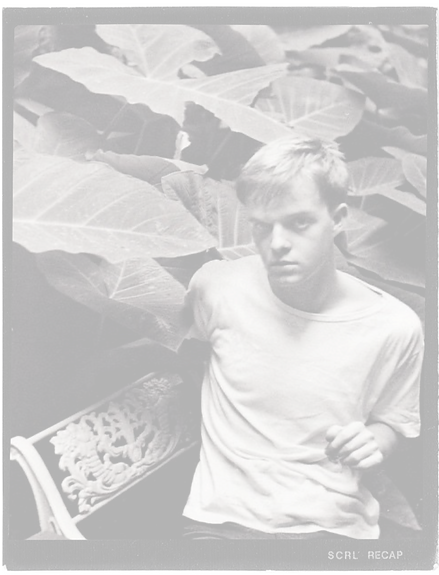
Born in 1924 in New Orleans and raised largely in Alabama, Capote’s childhood was lonely, fragmented, emotionally unstable. His parents were absent, and much of his upbringing unfolded through distance and abandonment. Perhaps this explains something fundamental about him — he became extraordinarily skilled at watching people.
Because children who feel out of place often become exceptional observers.
Capote himself once admitted that he felt like an outsider almost everywhere he went.
And somehow —
that outsider position became his greatest creative advantage.
He watched society without fully belonging to it.
Which meant he saw things other people politely ignored.

And then there was the voice.
The voice.
Because nobody sounded like Truman Capote.
Not structurally.
Not emotionally.
Not stylistically.
Writers are often recognizable.
Capote was unmistakable.
His prose felt precise yet strangely cinematic.
Elegant without becoming pretentious.
Sharp without losing tenderness.
Cruel occasionally.
But observant above all.
Tennessee Williams once said that what people truly needed to study about Capote was his originality of voice. And honestly — correct.
Books like and did not simply become culturally important because of plot.
People stayed for the atmosphere.
The precision.
The uncomfortable psychological accuracy.
The way Capote somehow understood loneliness extraordinarily well.
Especially beautiful loneliness.
The expensive kind.
The socially glamorous kind.
Which, unfortunately, still hurts exactly the same.


And then came one of his strangest revolutions:
Capote essentially reinvented literary journalism.
Or at least disturbed it enough to permanently alter its structure.
In Cold Blood — his obsessive account of the Clutter family murders in Kansas — changed nonfiction forever.
But here is the part people mention less often:
he approached journalism emotionally.
Psychologically.
Almost invasively.
He famously refused tape recorders and even notebooks during interviews because he believed they disrupted trust and changed human behavior. He relied largely on memory — terrifying honestly — claiming near-photographic recall in conversation.
Which sounds slightly unbelievable.
Yet somehow very Truman Capote.
He didn’t just gather information.
He absorbed people.
Sometimes too much.

Capote also possessed a bizarre collection of rituals and superstitions rarely discussed properly.
He refused to begin or finish projects on Fridays.
Disliked certain hotel room numbers.
Believed too many cigarette butts in an ashtray meant bad luck.
Tiny irrational systems of control surrounding an otherwise wildly chaotic life.
And perhaps this feels strangely familiar.
Because highly intelligent people often build strange rituals around uncertainty.
Writers especially.
As though routine might temporarily protect genius from disappearing.

Then there was society.
Or more specifically — New York high society.
Capote somehow became both insider and outsider simultaneously.
He moved among women he famously called his “swans” — glamorous, wealthy, untouchable social figures like Babe Paley and Lee Radziwill.
Women he deeply admired.
Women he listened to.
Women he perhaps understood too well.
And then —
he betrayed them.
Or perhaps exposed them.
Depends who you ask.
After publishing excerpts of Answered Prayers, filled with recognizable private details about elite friends, New York society effectively exiled him. The same people once obsessed with Capote suddenly refused him access.
Which feels almost Shakespearean honestly.
A man loved for seeing too much eventually punished for saying it out loud.

And of course —
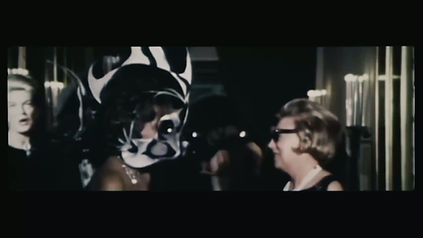
there was the legendary Black and White Ball.
1966
The Plaza Hotel.
540 guests.
Masks.
Social hierarchy functioning almost theatrically.
The kind of cultural event impossible to recreate today because people unfortunately overshare everything immediately online.
Capote planned every detail obsessively — down to monochromatic dress codes inspired partly by My Fair Lady. The invitations became symbols of status, and not receiving one felt socially catastrophic.
But perhaps the rarest detail of all?
Late in life, Capote repeatedly looked through scrapbooks of the party — hundreds of photographs carefully preserved — almost nostalgically replaying a world he had once controlled completely. He even dreamed of creating another impossible masked ball somewhere absurdly far away, like Paraguay.
Which feels very him.
Slightly theatrical.
Slightly lonely.
Completely committed to fantasy.
What makes Truman Capote inspiring is not perfection.
God no.
He was contradictory.
Difficult.
Brilliant.
Self-destructive occasionally.
But perhaps that is precisely the point.
Capote reminds us that observation matters.
That voice matters.
That originality often requires accepting loneliness.
And maybe most importantly —
that people who notice too much often create the most unforgettable things.
Even if the world occasionally punishes them for it.