


There are filmmakers.
And then there is Sergei Parajanov.
Which feels less like a profession and more like an entirely separate psychological condition.
Calling him a director somehow feels insufficient.
Too technical.
Too clinical.
Because Sergei Parajanov did not simply make films.
He created worlds.
Entire emotional architectures built from memory, folklore, symbolism, religion, costume, silence, absurdity, grief and beauty.
An unreasonable amount of beauty actually.
The kind of beauty that feels slightly dangerous.
Because beauty, historically speaking, tends to become threatening the moment it refuses obedience.
And Parajanov refused many things.
Especially simplicity.

To understand Parajanov, one must first understand this:
he did not believe cinema had to behave normally.
Which, quite frankly, already made him inconvenient.
Cinema at the time often insisted on linear storytelling.
Beginning.
Middle.
End.
Psychologically digestible.
Parajanov looked at that structure and essentially said:
No.
Instead, his films behaved like memory behaves.
Fragmented.
Emotional.
Symbolic.
Occasionally irrational.
Because human experience has never really been particularly organized anyway.

Perhaps no work explains this better than The Color of Pomegranates.
Or perhaps more accurately —
no film confuses and captivates people with quite the same consistency.
The film, loosely inspired by Armenian poet Sayat-Nova, does not unfold traditionally.
There are no easy explanations.
No emotional shortcuts.
Instead —
images.
Stillness.
Objects.
Textures.
Ritual.
Fabric.
Pomegranates split open like symbols carrying secrets nobody fully explains.
Watching a Parajanov film often feels less like viewing cinema and more like entering someone else’s dream.
Or memory.
Or emotional archive.
Depending on the day.
His work existed somewhere between painting, theatre, religion, poetry and visual anthropology.
Cinema, but deeply unwilling to remain only cinema.
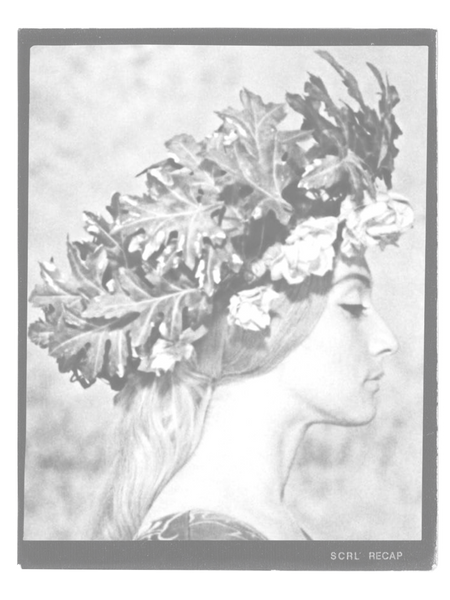
And visually?
Nobody looked like him.
Nobody filmed like him either.
His frames often resembled Renaissance paintings interrupted by surrealism.
Symmetry.
Color.
Textiles.
Folklore.
Objects arranged almost ceremonially.
Everything intentional.
Everything speaking.
Even silence somehow looked expensive in Parajanov’s world.
He understood something many artists forget:
beauty communicates.
Not superficially.
Psychologically.
Emotionally.
Politically even.

Which perhaps explains why the Soviet Union struggled with him so much.
Because authoritarian systems rarely enjoy difficult artists.
Especially artists impossible to categorize.
Especially artists refusing conformity.
Parajanov’s work was repeatedly censored.
His films banned.
His artistic language treated with suspicion.
And eventually —
he was imprisoned.
Officially under fabricated accusations.
Unofficially?
Because he was inconvenient.
Too free.
Too outspoken.
Too different.
The kind of artist authoritarian structures instinctively fear.
He openly criticized Soviet cultural limitations and rejected ideological obedience.
Which history tends to remember more kindly than governments do.
And yet —
even prison did not dismantle him.
He continued creating.
Making collages.
Drawings.
Objects from scraps.
Because for certain people art stops being career.
It becomes survival.

And then there is something deeply important about Parajanov that often gets overlooked:
his devotion to culture itself.
Armenian culture.
Georgian culture.
Ukrainian culture.
Memory.
Tradition.
The things political systems repeatedly attempt to flatten into sameness.
Parajanov insisted on preserving complexity.
Language.
Costume.
Music.
Symbolism.
He understood that culture survives through repetition.
Through protection.
Through stubbornness perhaps.
And there is something strangely beautiful about an artist so committed to memory while living under systems constantly attempting erasure.

What makes Sergei Parajanov inspiring is not simply genius.
Genius exists.
Rarely.
But resistance through imagination?
That becomes rarer.
Parajanov reminds us that art does not always need to explain itself politely.
That beauty can become rebellion.
That complexity deserves protection.
And perhaps most importantly —
that becoming unforgettable often requires refusing to become understandable to everyone.
Because some people are not here to fit inside systems.
They are here to rearrange them aesthetically.